Cart
0
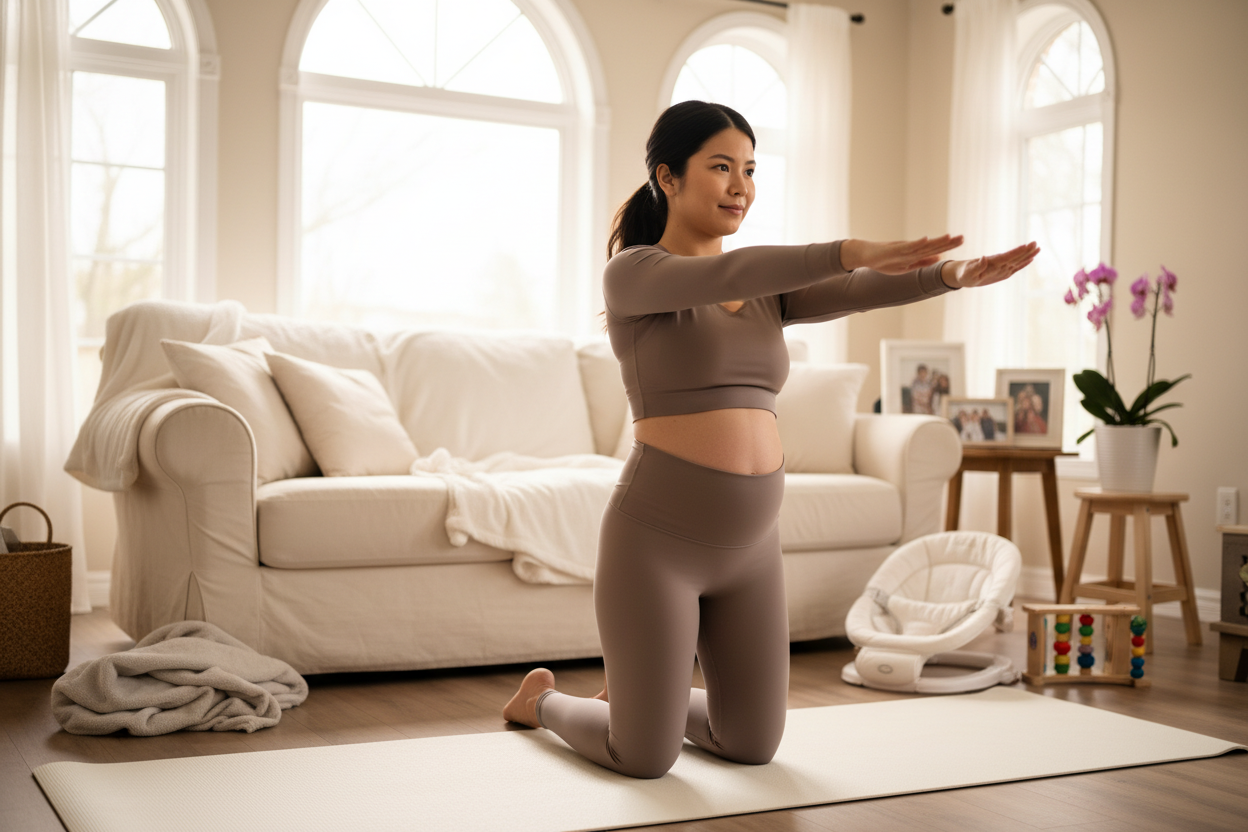
If you’ve been wondering when (or how) to rebuild your core and pelvic floor after birth, you’re not alone. Postpartum movement can feel confusing—especially when your body feels different, your energy is unpredictable, and advice online ranges from “do nothing” to “bounce back fast.”
Here’s the truth: a safe return to movement is possible—and it can be gentle, slow, and supportive.
What the pelvic floor and core do (in simple terms)
Your pelvic floor is a group of muscles that supports your bladder, bowel, and uterus. Your core includes deep abdominal muscles that help with stability, posture, and daily movement.
During pregnancy and birth, these areas go through major change. Postpartum, you might notice:
-
Leaking when you cough, laugh, or jump
-
A “heavy” or dragging sensation in your pelvis
-
Core weakness or back discomfort
-
Ab separation (a gap that can feel like “doming” when you sit up)
-
Discomfort with certain movements
Many of these symptoms are common—but you don’t have to just live with them.
Your goal isn’t “flat stomach” — it’s function
Postpartum recovery is about rebuilding strength and support so you can:
-
move comfortably
-
carry your baby without pain
-
feel stable through your hips and core
-
return to exercise when your body is ready
A gentle starting point (that isn’t overwhelming)
Think of postpartum movement in 3 layers:
1) Breath + relaxation
Your pelvic floor responds to breathing. Gentle breathwork can help reduce tension and reconnect you to your body—especially if you’re holding stress physically.
2) Everyday movement
Short walks, gentle mobility, and posture awareness go a long way. Tiny, consistent movement often beats intense workouts you can’t maintain.
3) Gradual strengthening
When you’re ready, you can build strength progressively—starting with low-impact exercises that don’t create pressure or strain.
Signs to slow down (and get extra support)
Consider seeing a pelvic health physiotherapist or your GP if you notice:
-
heaviness/pressure in the pelvis
-
leaking urine or bowel control issues
-
pain with movement or sex
-
abdominal doming during simple movements
-
symptoms that worsen when you exercise
These are signs your body may need a more guided recovery plan—and that support can be life-changing.
A kind reminder
You don’t need to “earn” recovery by pushing harder. You deserve recovery that feels safe, supported, and realistic for your life right now.